
 (330) 437-5795

Removing Gray Squirrels and Flying Squirrels from the Same Home
At Frontline Animal Removal, we often remind homeowners that wildlife problems rarely stay simple. Many calls begin with a report of a single nuisance animal, only to reveal a more complicated situation once a full inspection is completed.
Recently, Ryan encountered a great example of this during a job in northeast Ohio where two different squirrel species—gray squirrels and flying squirrels—were both present in the same house.
While it might sound unusual, this situation is something we do encounter from time to time. It isn’t something that happens on every squirrel job, but it’s also not uncommon at all. In fact, the relationship between these two species often explains why it happens.
Below we’ll walk through the job, explain how the situation develops, and compare these two very different squirrel species when they become nuisance wildlife.
A Multi-Species Squirrel Job
Ryan was initially called out to this property because the homeowner suspected gray squirrels in the attic. After completing an exterior inspection, he quickly confirmed their presence. Gray squirrels are active during the daytime and tend to leave visible clues such as chewed openings, damaged vents, or gnawed wood along rooflines.
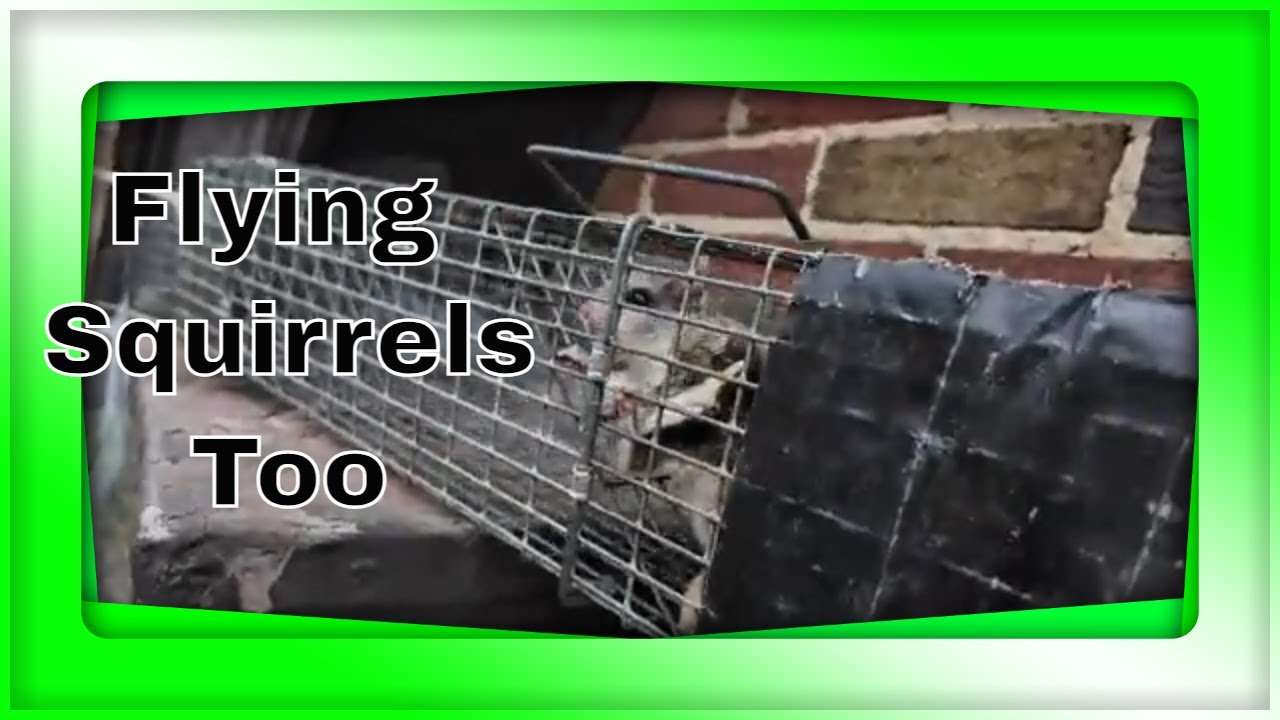
Traps were set near the entry area high up along the corner of the house, and Ryan successfully removed two gray squirrels from the structure. At that point, the primary problem appeared to be resolved.
However, during the inspection and trapping process, another discovery was made.
While working the property, Ryan realized that flying squirrels were also present. These squirrels are much smaller, nocturnal, and far more secretive than gray squirrels. Because of their behavior, homeowners often do not realize they are present until they hear scratching or light movement in the attic, ceiling and walls at night.
So the job transitioned from a gray squirrel removal to what Ryan often calls a multi-species wildlife job. With the gray squirrels removed, the focus shifted to trapping and addressing the flying squirrels that had also taken advantage of the structure.
You can see the setup and hear Ryan explain the situation in the video from this job.
Why Gray Squirrels Often Create the Problem
When both species are present in a home, gray squirrels are usually the ones responsible for the initial damage.
Gray squirrels are larger, stronger, and extremely destructive. They are well known for chewing through:
- Roof edges
- Soffits and fascia boards
- Wooden trim
- Roof vents
- Weak construction seams
Their constant gnawing behavior allows them to chew their way directly into structures. Once a hole is created, it becomes an easy entry point for other wildlife.
This is where flying squirrels come into the picture.
Flying squirrels typically do not create large entry holes themselves. Instead, they are experts at finding small openings and exploiting them. If gray squirrels chew a hole into an attic or roofline, flying squirrels can quickly locate that opening and begin using it as well.
In other words, gray squirrels break in, and flying squirrels follow.
Comparing Gray Squirrels and Flying Squirrels as Nuisance Wildlife
Although they share the same environment, these two species behave very differently when they invade homes.
Gray Squirrels
Gray squirrels are the most common nuisance squirrel in northeast Ohio. They are active during the daytime and are very visible around homes, trees, and rooftops.
When gray squirrels move into an attic, homeowners often notice:
- Loud daytime scratching or running
- Chewing noises
- Visible roof damage
- Pieces of wood or debris falling from entry areas
Because of their size and strength, gray squirrels can cause significant structural damage if the entry point is not repaired quickly.
For more information about gray squirrels and other squirrel species we deal with, homeowners can visit our Types of Squirrels page.
Flying Squirrels
Flying squirrels are very different animals. They are much smaller and almost entirely nocturnal, which means they are active at night. Instead of running loudly across the roof like gray squirrels, flying squirrels tend to move more quietly and may glide between trees before accessing the home.
Signs of flying squirrels often include:
- Nighttime scratching or light movement in the attic
- Small entry gaps near rooflines or vents
- Groups of squirrels living together in insulation
Unlike gray squirrels, flying squirrels often live in colonies in the wintertime especially, meaning multiple animals may be present inside a structure at the same time.
Homeowners interested in learning more about these animals can visit our detailed flying squirrel removal page, which explains their behavior and the methods required to remove them safely.
Why Proper Removal and Repairs Matter
This job highlights an important lesson in nuisance wildlife control. Removing the animals is only part of the solution. Identifying how they entered and repairing the damage is critical to preventing the problem from happening again.
At Frontline Animal Removal, we focus on both parts of the process:
- Trapping and removal of the animals
- Professional repairs and exclusion work to close entry points
When gray squirrels chew openings, those areas must be reinforced so other wildlife—like flying squirrels, raccoons, or even bats—cannot use them later.
A Reminder for Homeowners
If you hear noises in your attic or notice damage along your roofline, it’s important to have the problem inspected sooner rather than later. What starts as a single species issue can sometimes become a multi-species problem, just like this job.
Frontline Animal Removal provides wildlife removal and repair services throughout Stark County, Summit County, and Portage County, serving homeowners in the Canton, Akron, and Kent Ohio areas.
If squirrels or other wildlife are causing problems around your home, our team can inspect the structure, remove the animals, and repair the damage so the issue stays resolved.
And be sure to watch the video from this job where Ryan explains how this gray squirrel and flying squirrel situation unfolded. It’s a great real-world example of how wildlife problems can develop—and how they can be solved properly.